









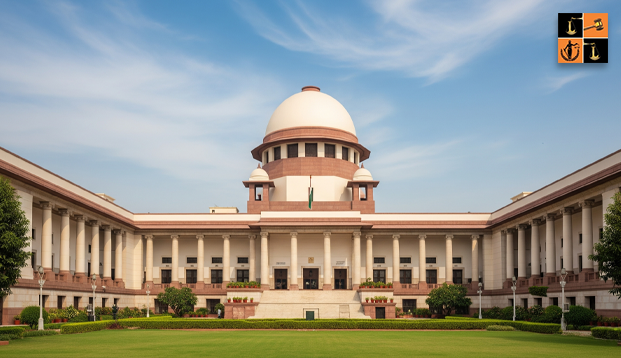
Recently, the Supreme Court accepted a post-conviction settlement between parties in a cheque dishonour case and quashed the conviction and sentence imposed upon the accused. The Court held that where the complainant has voluntarily agreed to compound the offence after receiving full and final payment, the compromise can be accepted even after the accused has been taken into custody.
The case stemmed from proceedings under Section 138 of the Negotiable Instruments Act, where a company and its director were convicted for cheque dishonour and directed to undergo imprisonment along with payment of compensation under Section 357(3) of the Code of Criminal Procedure. Although the conviction was affirmed by the Appellate and Revisional Courts, the parties subsequently arrived at a full and final settlement, with the complainant agreeing to compound the offence under Section 147 of the Negotiable Instruments Act after receiving the agreed amount. However, the application seeking compounding was rejected on the ground that a concluded judgment could not be reviewed, prompting the appellants to approach the Apex Court.
The Appellants contended that the dispute had been amicably resolved after the complainant received the entire settlement amount and agreed to compound the offence. The Counsel argued that once the complainant's grievance stood fully satisfied, the courts below ought to have permitted compounding under Section 147 of the Negotiable Instruments Act instead of rejecting the application solely on the ground that the conviction had already been affirmed.
The Court noted that the parties had entered into a settlement after the complainant agreed to compound the offence upon receiving full and final payment, and that the settlement amount had already been paid and acknowledged. Relying on its earlier decision in Gian Chand Garg vs. Harpal Singh and Another, the Court observed, "we have no hesitation to accept the compromise entered into and compound the offence, particularly in the light of settlement arrived at between the parties."
The Bench found that the settlement fully addressed the complainant's grievance and therefore accepted the compromise notwithstanding the earlier rejection of the compounding application by the courts below.
Consequently, the Apex Court allowed the appeal, set aside the impugned order of the High Court, accepted the compromise entered into between the parties, and compounded the offence. As a result, the conviction and sentence imposed upon the appellants were quashed. Taking note of the fact that the director continued to remain in custody, the Court directed the Jail Superintendent, Central Jail, Raipur, to release him forthwith and communicate compliance to the Registry. All pending applications were disposed of accordingly.
Case Title: Parsharvanath Weld Wires Pvt Ltd & Anr. Vs. State of Chhattisgarh & Anr.
Case No.: Criminal Appeal No.2904/2026
Coram: Hon’ble Justice Aravind Kumar, Hon’ble Justice Prasanna B. Varale
Advocate for the Petitioner: AOR. Salvador Santosh Rebello, Adv. Aishwarya Kumar Dubey, Adv. Raghav Sharma, Adv. Moulishree Pathak, Adv. Manisha Gupta, Adv. Nishant Kumar
Advocate for the Respondent: AOR Parijat Kishore, Adv. Mudita Arora, Adv. Aryan Sharma
Read Judgment @Latestlaws.com
Picture Source :



















